| Name of Honoree | Year |
| Frances Lewis Stevenson | 2024 |
| Daylene Hogue Wood | 2022 |
| Carmela Martini | 2022 |
| Doris Sonnie Flint | 2020 |
| Barbara Black Brinkman | 2019 |
| Jean Wendel Goldsmith | 2019 |
| Carole Bekke Soper | 2017 |
| Lillian Newton Landrum | 2017 |
| Patricia Kindig Ross | 2016 |
| Dorothy Berkey White | 2015 |
| H.K. Stuart | 2015 |
| Patricia Peterson Danielson | 2015 |
| Jane Lau Sullivan | 2014 |
| Marylin Hough Werschky | 2013 |
| Elisabeth Ford Siebert | 2013 |
| Eleanor Smith Slaughter | 2013 |
| Ruth Ross Sager | 2012 |
| Dr. Paul Martin | 2011 |
| Virginia Boyce Schoonmaker | 2010 |
| Marcia Connell Strickland | 2009 |
| Helen Million Preston | 2008 |
| Gertrude Tressel Harpham | 2007 |
| Mary Ann Lummis Bowyer | 2006 |
| Elizabeth Beach Norris | 2004 |
| Phyllis Stabeck Poehler | 2002 |
| Jane Connell Hanson | 2001 |
| Frances Alexander Hecker | 1999 |
| Mary Frisinger Peterson | 1998 |
| Dorothy Knight Wildasin | 1997 |
| Mildred Moyer Baynard | 1996 |
| Dorothy Garrett Martin | 1995 |
| Gwen Dew Buchanan | 1994 |
| Sarah Tilghman Hughes | 1993 |
| Virginia Gard Mastio | 1992 |
| Laura Bertram Dillon | 1991 |
| Margaret Richardson Hay | 1990 |
| Helen Russell Byars | 1989 |
| Jane Cowell Sheaffer | 1988 |
| Leota Woy | 1987 |
| Roberta Abernethy | 1986 |
| Maisie Clugston Groves | 1986 |
| Ina Firkins | 1985 |
| Fay Hamilton Jones | 1984 |
| Nina Foster Howard | 1983 |
| Ada Comstock Notestein | 1982 |
| Ada May Brown | 1981 |
| Fannie Mulliken Thompson | 1980 |
| Marjory A Rice | 1979 |
| Edith Taylor Smith | 1978 |
| Lillian Ray Titcomb | 1977 |
| Marguerite Dawson Winant | 1976 |
| Virginia Brand | 1975 |
| Carolyn Coffman Moorman | 1974 |
| Mary Thompson Stevens | 1973 |
| Carolyn Benton Cockefair | 1971 |
| Joe Ross Pancoast | 1970 |
| Virginia Riesterer Gates | 1969 |
| Ethel Tukey Korsmeyer | 1968 |
| Jean Gooch Teall | 1967 |
| Ruth Canary Turpin | 1966 |
| Florence Cornell Bingham | 1965 |
| Irene Howell Forman | 1964 |
| Jessie McGilvray Treat | 1963 |
| Nancy Brown Woollett | 1962 |
| Barbara Jean Wallenfang | 1961 |
| Dorothy Glenn Holsinger | 1960 |
| Edith Abbott | 1959 |
| Carolyn Boli Stanton | 1958 |
| George Banta | 1957 |
| Gratia Alta Countryman | 1956 |
| Ruth Bryan Rohde | 1955 |
| Helen Humphreys Lawrence | 1953 |
| Blanche Garten | 1952 |
| Hazel Whitaker Vandenberg | 1950 |
| Alta Gwinn Saunders | 1948 |
| Alice Perry Gradle | 1946 |
| Grace Abbott | 1940 |
| Corinne Miller Williamson | 1938 |
| Leulah Judson Hawley | 1934 |
| Jessie Wharton Kingery | 1928 |
| Anna Boyd Ellington | 1924 |
By Diane Hall, Eta Upsilon-Drexel, archivist/historian, and Louis Green, assistant director of belonging efforts
Content Warning: This blog post contains historically accurate information regarding xenophobia and racism directed at people of Japanese ancestry in the United States during WWII. Information on correct terminology around this topic is provided, with additional content and resource lists for further exploration.
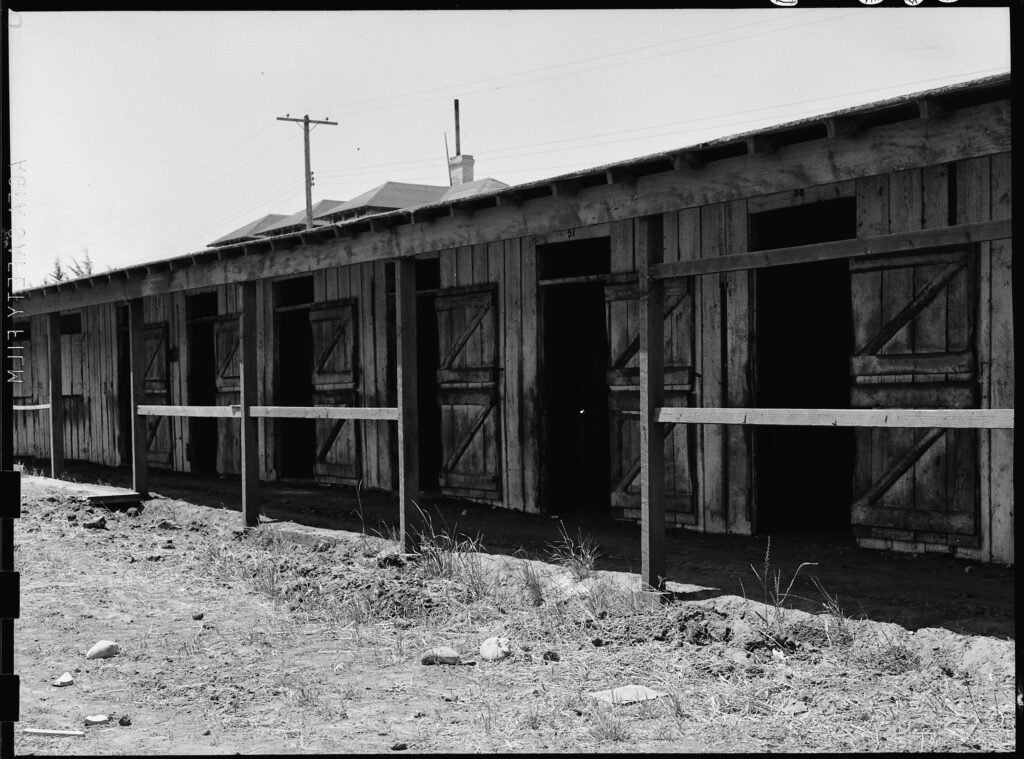
It might sound like the plot of a dystopian novel, but the government did indeed incarcerate its own citizens during World War II, not because they were convicted of any crime, but simply because of their Japanese ancestry. These individuals were ordered to "Assembly Centers" with as little as a one-weeki notice, often resulting in the loss of homes, businesses and other assets. The assembly centers, often repurposed structures like horse stables, housed people before they were transported to remote camps surrounded by 24-hour guards. Shockingly, no one was exempt from this ordeal – the elderly, those with disabilities, young children and pregnant individuals all found themselves forcibly relocated.ii
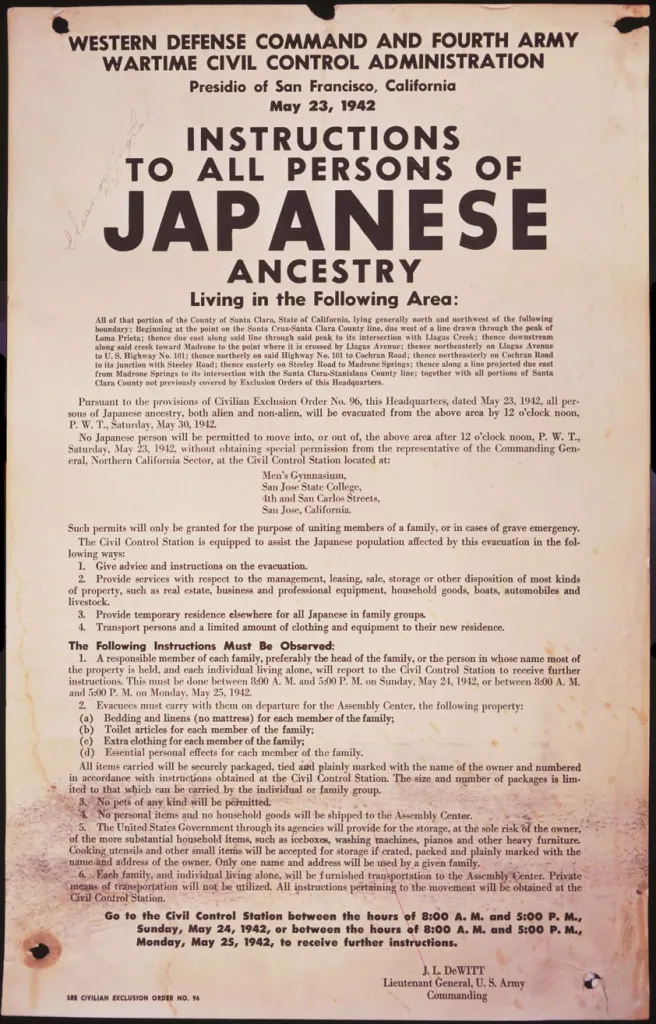
This grim reality affected 120,000 men, women and children of Japanese ancestry in the United States during World War II. Among them, approximately 80,000 were nisei (second generation) and sansei (third generation), while the remaining 40,000 were issei (first generation).iii Despite having lived in the United States for decades, issei were not eligible for citizenship at the time.iv
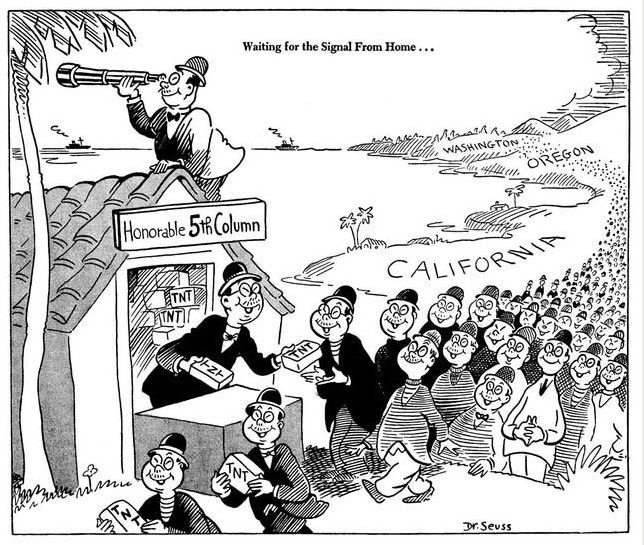
The bombing of Pearl Harbor on December 7, 1941, by the Imperial Japanese Navy Air Force intensified discrimination and hostility towards Japanese Americans. Paranoia swept the country, fueled by fears of a Japanese "Fifth Column." On February 19, 1942, just ten weeks after the bombing, President Franklin D. Roosevelt issued Executive Order 9066. While not explicitly singling out those of Japanese heritage, this order effectively stripped them of all civil rights, leading to their forced removal from homes into hastily built camps surrounded by armed guards.v
The effects of Executive Order 9066 and the resulting forcible removal of Japanese Americans from their homes and communities were profound and long-lasting. The loss of property devastated the financial security of many of the incarcerated individuals and families. It is estimated that Japanese Americans lost $400 million because of their forced relocation.vi Later research also found many suffered long-term negative physical and psychological problems because of this ordeal.vii
These camps, ten in total, were spread across seven states.viii The first to open was Manzanar, located in an isolated area in the southeast of California and operated by the War Relocation Authority (WRA). Propaganda was carefully crafted to portray the camps positively, presenting the incarcerated people as content.ix Short films produced by the United States government including Japanese Relocation (1942) and A Challenge to Democracy (1944) gave an impression of dwellings that were well built, those forced into them as happy, and that the government was provided protection to their property as well as providing educational and employment opportunities. The WRA even organized curated tours for community leaders to visit the camps, showcasing only what they wanted the public to see.
One such visitor was Florence Cornell Bingham, Upsilon–Stanford (initiated Chi-Cornell, later changed her affiliated chapter after relocating to California), who was involved with the California P.T.A. and Fraternity President of Delta Gamma. Invited by the WRA, Florence visited Manzanar twice, in 1943 and 1944. In her articles published in the ANCHORA, she highlighted the discrepancy between media portrayals and the harsh realities within the camps. Read the 1943 article here and the 1944 article here.
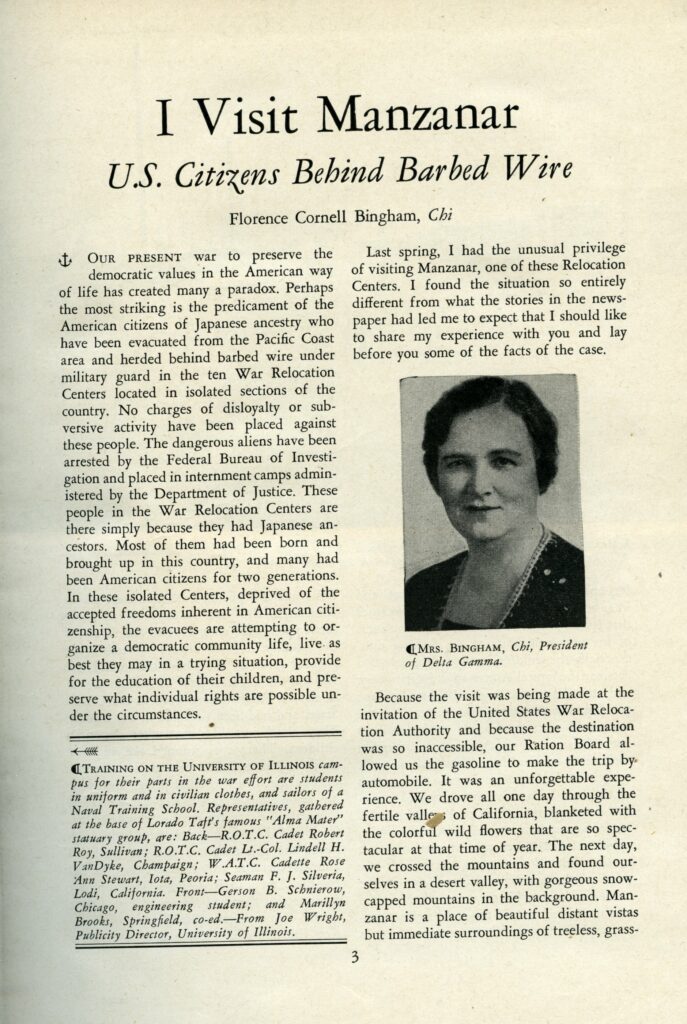
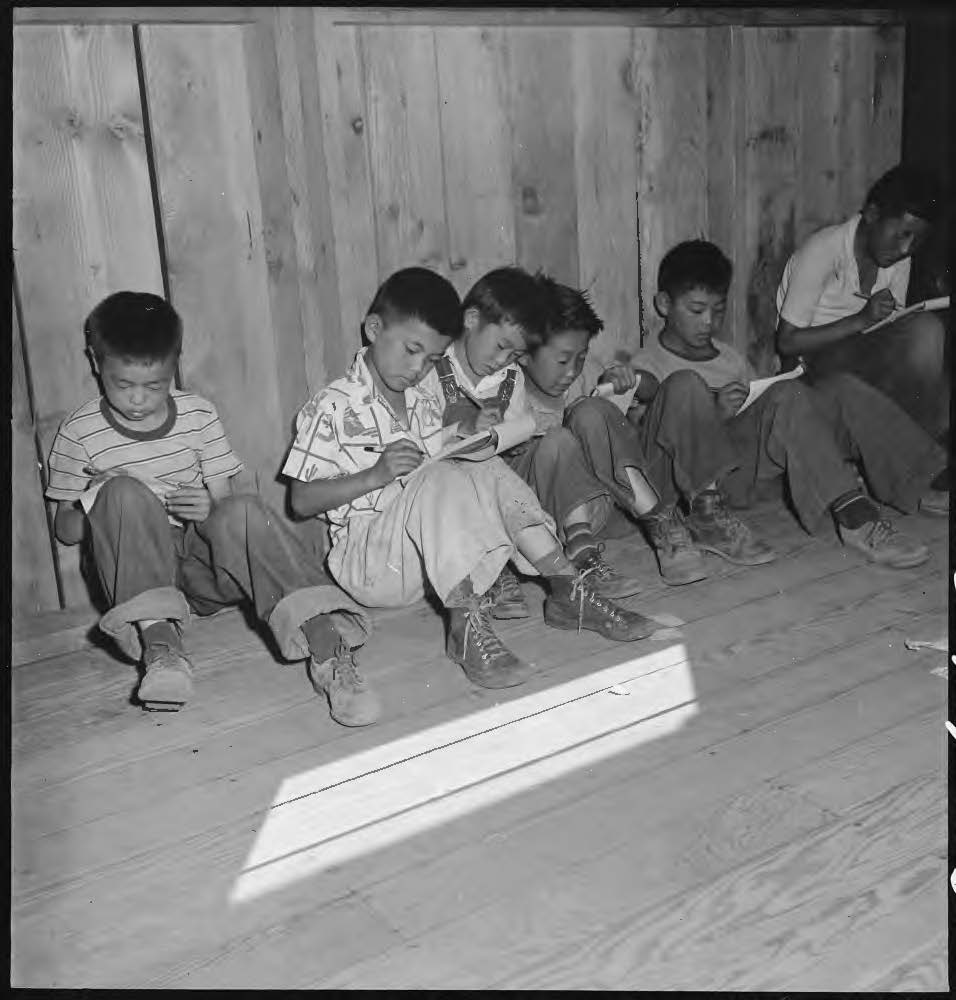
Florence vividly described the cramped living conditions, with six to eight people expected to share rooms of only 20 by 25 feet, lacking basic amenities like running water, toilets and cooking facilities. Communal bathrooms and cafeterias were the norm, and food was strictly rationed. Military police guarded the camp boundaries, and school rooms often lacked proper lighting, heating, ventilation and sanitation.
The weather was harsh, with temperatures soaring to 110°F and dropping below freezing. The high winds of the desert would coat the camp in layers of dust.x
While Florence's writings are not flawless, and her emphasis on "Americanization" may be viewed through a modern lens as downplaying Japanese identity, her dissenting opinions challenged the prevailing public sentiment. In 1942, the American Institute of Public Opinion found that 93% supported the incarceration of non-citizen Japanese Americans (issei), and 59% supported the incarceration of citizen Japanese Americans (nisei and sansei).xi
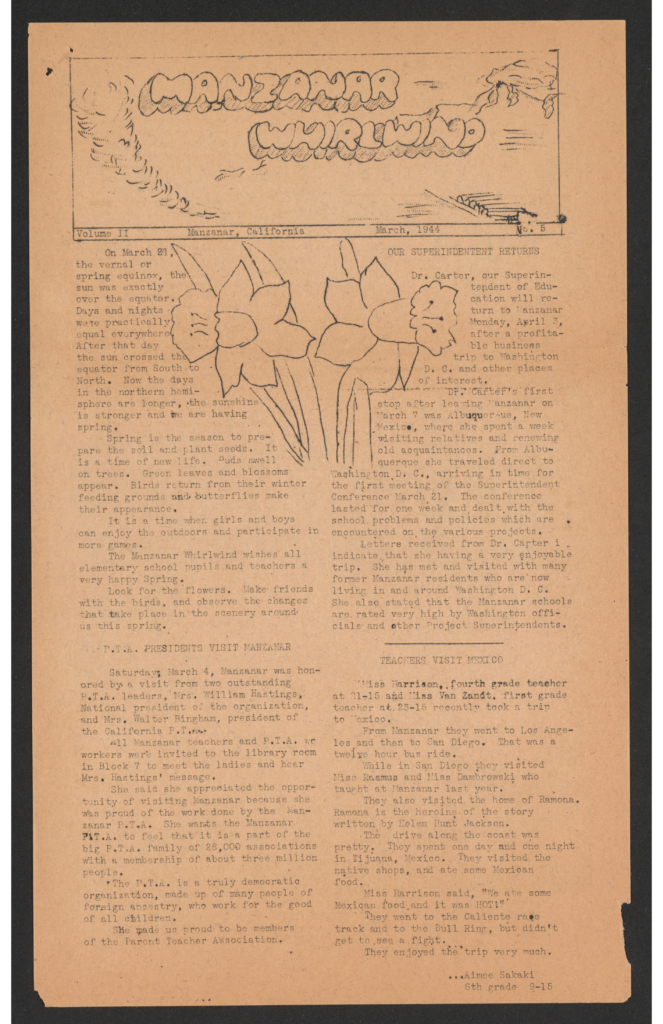
Delta Gamma's motto is "do good," and Florence embodied this by speaking out against injustice. She saw past the propaganda and expressed her dissenting opinion to Delta Gammas nationwide. Investigating the past allows us to learn valuable lessons for a better future. What lessons can we draw from this historical injustice? Share your thoughts and continue the conversation.
Terminology
You may have heard the term "internment camp" to describe places like Manzanar and the other camps. However, this is an inaccurate label. The National Park Service (NPS) provides a list of accurate terminology, revealing that the correct label for these sites is "concentration camps."xii In 1998, the Japanese American National Museum and the American Jewish Committee issued a joint statement addressing the use of the term "concentration camp" in this context.xiii
When discussing the movement of Japanese Americans into the assembly centers and ultimately the concentration camps, use terms liked “forced removal,” “expulsion,” and “mass removal” rather than “evacuation”. Furthermore, the term "incarceration" should be used instead of "imprisonment." Replace "imprisoned" or "prisoner" with "incarcerees" or "incarcerated person." Explore the NSP list of terminology and other provided sources for a more in-depth understanding.
iihttps://densho.org/learn/introduction/american-concentration-camps/
iiihttps://encyclopedia.ushmm.org/content/en/article/japanese-american-relocation
ivhttps://immigrationhistory.org/item/takao-ozawa-v-united-states-1922/
viiihttps://www.pbs.org/childofcamp/history/camps.html
ixhttps://immigrationhistory.org/item/takao-ozawa-v-united-states-1922/
xihttps://exhibitions.ushmm.org/americans-and-the-holocaust/main/japanese-american-internment
March 15, 2024, officially marks 150 years of the Do Good Sisterhood. Founded in 1873 at Lewis School in Oxford, Mississippi, Delta Gamma has more than 260,000 initiated members, 149 collegiate chapters and more than 170 alumnae groups.
The sesquicentennial kicked off at the 2022 Convention in Philadelphia, Pennsylvania, included a Homecoming Celebration Weekend in Memphis, Tennessee and Oxford, Mississippi, in the summer of 2023 and will conclude at Convention in Palm Desert June 27-29.
This Founders Day, sisters are invited to join us for a virtual Founders Day program. We'll be joined by Delta Gamma Archivist Diane Hall, Eta Upsilon-Drexel, who will take us into the Delta Gamma vault and show us some of DG's most coveted "crown jewels." She will teach us the history, meaning, and significance of some of our oldest and most precious badges and jewelry. In addition to Diane's presentation, we'll celebrate our Founders with a candlelighting ceremony. You won't want to miss this, so register today!
For Immediate Release:
Contact: Mallory Borino, Director of Marketing and Communications, media@deltagamma.org

Columbus, Ohio [February 20, 2024]— In honor of the sesquicentennial milestone, Delta Gamma Fraternity has partnered with HistoryIT to digitize over 150 years of archival treasures currently stored and displayed at Executive Offices (EO). This project will span over four years and will help ensure the long-term preservation of the history of Delta Gamma.
“History gives us a connected past and a shared identity.” Said Fraternity Archivist and Historian Diane Hall, Eta Upsilon-Drexel. “That is why its preservation is so important. The history of the Do Good Sisterhood has been carefully safeguarded for 150 years. For those 150 years, Delta Gamma has touched so many lives and our members have contributed to the world in extraordinary ways. Now, our members will have access to this vast history at their fingertips. It is awe-inspiring as a historian to be a part of an organization that cares so deeply about its past. To be able to make it accessible to all members of truly remarkable. This kind of project is a dream come true for any historian and I feel so honored to be part of such an amazing work.”
Up to this point, a fraction of the items have been displayed for visitors at Executive Offices in Columbus, Ohio. And while a future state-of-the-art museum at Executive Offices is underway, members and the public will soon be able to access the entire archive via an online searchable database curated by History IT.
"Delta Gamma's dedication to saving and sharing their history is truly admirable. By digitally preserving the entirety of the Fraternity's archives, countless new stories and new connections will be made available to anyone, anywhere.
— Kristen Gwinn-Becker, Founder & CEO of HistoryIT
We are honored that Delta Gamma has trusted our team with safeguarding their history and sharing it with the world. We look forward to developing a digital museum that showcases 150 years of the Do Good Sisterhood and inspires future generations."
HistoryIT has already been digitizing all prior issues of the ANCHORAs, going back to the first issue from April 1884. Those and 400 other objects from the archives that HistoryIT digitized to begin building the online database were funded through the Delta Gamma Foundation.
While this project is underway, archive materials will be safely stored offsite during the renovation of Executive Offices. The digital archive will be unveiled at the 71st Biennial Convention held in Palm Desert, California June 26-30, 2024.

About Delta Gamma: Delta Gamma Fraternity was founded in 1873 at Lewis School in Oxford, Mississippi. The Fraternity’s primary purpose is to foster high ideals of friendship, promote educational and cultural interests, create a true sense of social responsibility and develop the best qualities of character. Delta Gamma has more than 260,000 initiated members, 149 collegiate chapters and more than 160 alumnae groups. Delta Gamma Fraternity Executive Offices is in Columbus, Ohio.
About Delta Gamma Foundation: Incorporated in 1951, the Delta Gamma Foundation is a 501(c)3 nonprofit organization formed as a complement to the Delta Gamma Fraternity, creating a vehicle for members to promote the educational interests and social responsibility referenced in Article II of the Fraternity Constitution. The Delta Gamma Foundation fosters lifetime enrichment for members, promotes Service for Sight and partners with the Fraternity to ensure the future of our sisterhood.
From the Archives: Article II
What better Delta Gamma artifact to start the sesquicentennial year with than Article II? Ask 150 Delta Gammas, “What is Delta Gamma?” and you will likely hear the word “friendship” in all 150 answers.
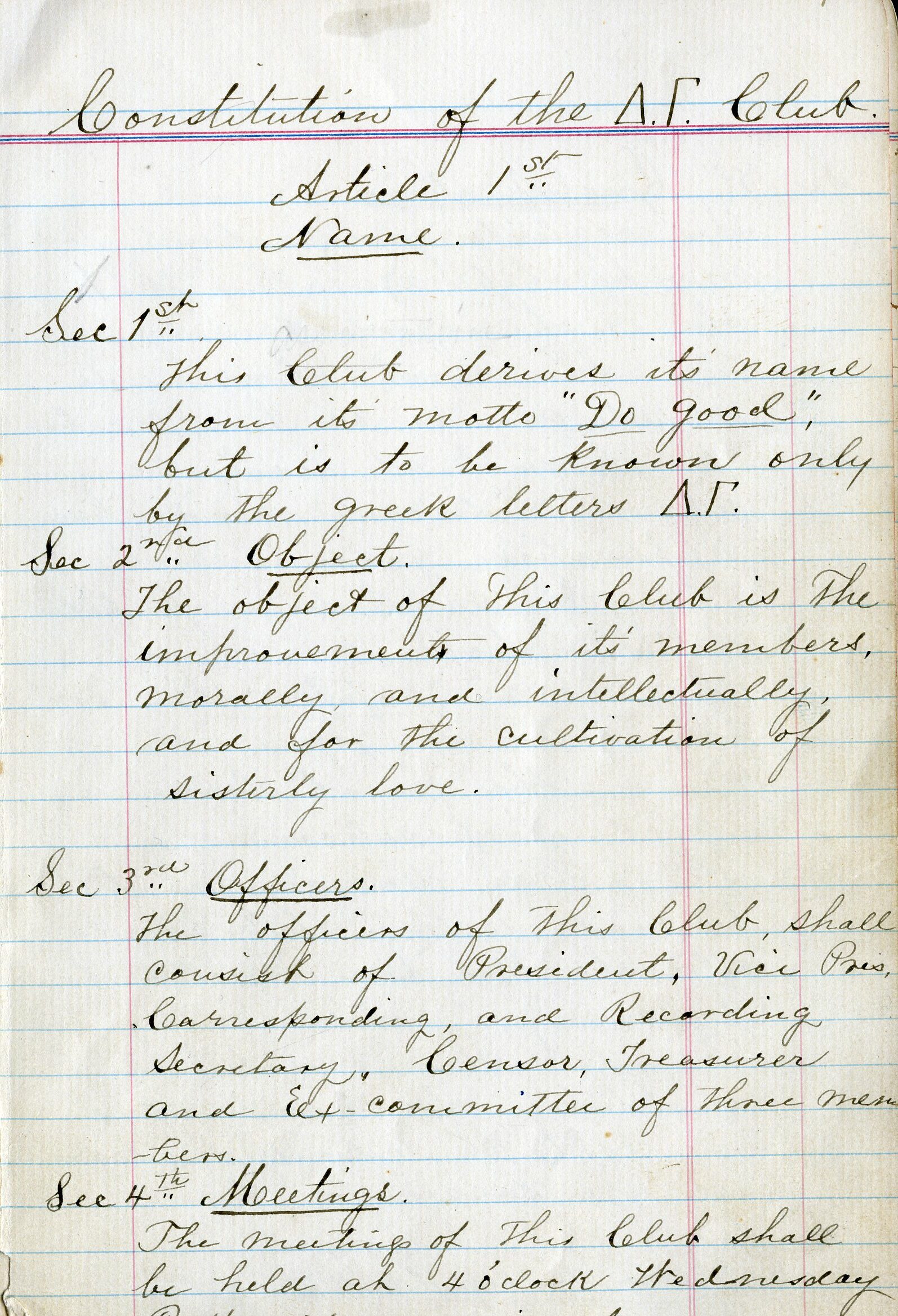
The origin of Article II goes back to our very founding. The very first Constitution was written the night Delta Gamma was created. Anna, Eva and Mary were sitting on “Old father Noah”, the name they had given the large four-poster bed in their room when they decided to form a society for mutual helpfulness. Because Anna was seated outside the bed, she slipped out and retrieved a pad of paper and pen. The three then wrote the first Constitution and bylaws. Unfortunately, that document has been lost to time. The oldest Delta Gamma Constitution dates to 1877 and is kept in the Frances Lewis Stevenson Archives at Executive Offices. As it was only four years after the founding, it is likely very similar to the one the Founder wrote that night.
At that time, the wording that is the predecessor of Article II of today was not its own article; it was section two of article one. It read, “The object of this club is the improvement of its members, morally and intellectually, and for the cultivation of sisterly love.” Revisions were made throughout the years, and in 1885, we see something closer to what we have today.
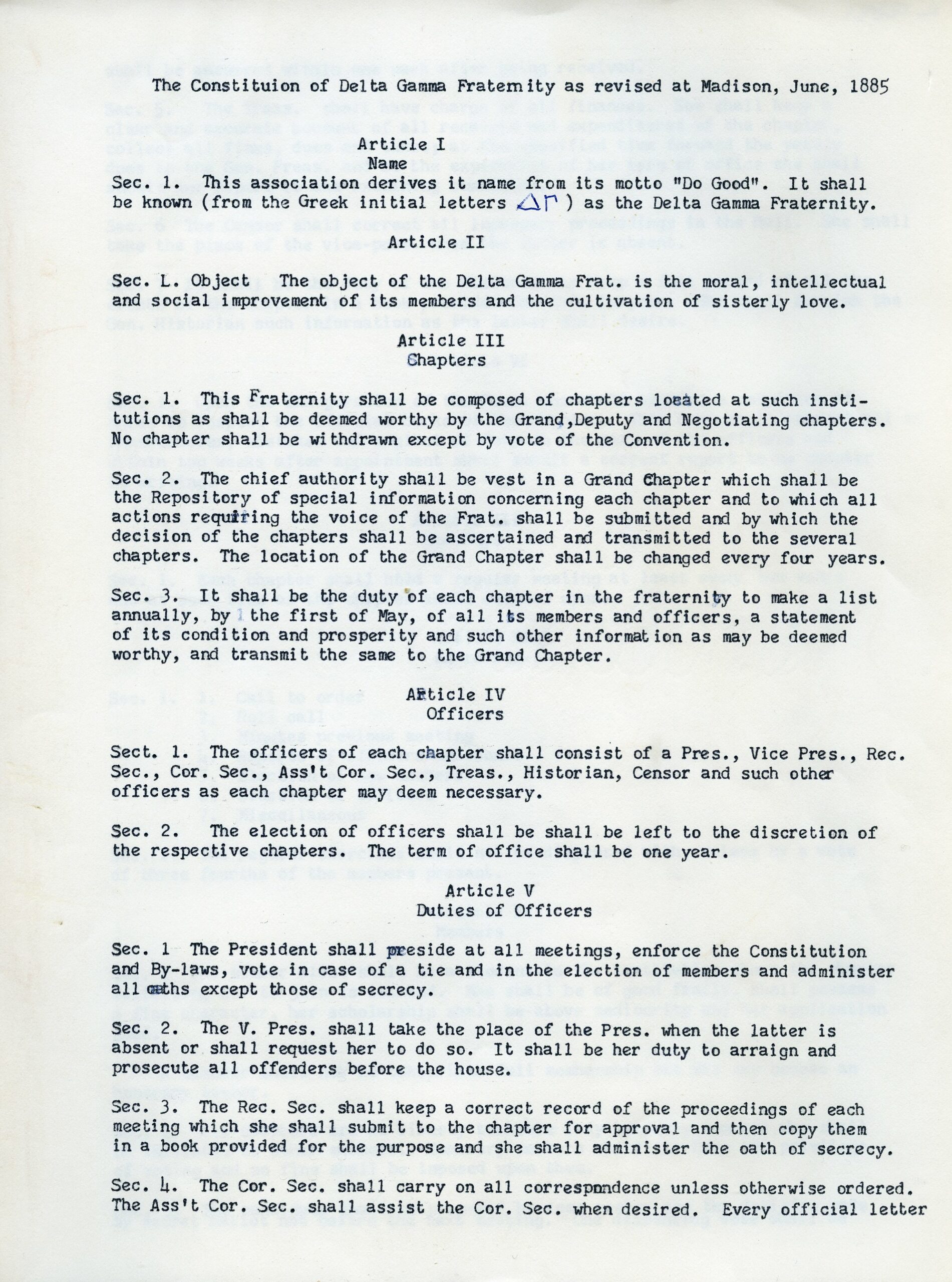
While the wording has changed, we can see the origins of the Article II of today, “The object of this Fraternity shall be to foster high ideals of friendship among women, to promote their educational and cultural interests, to create in them a true sense of social responsibility, and to develop in them the best qualities of character.” As we reflect on the past 150 years of our history, we will be considering not only the times when this ideal has been upheld but also times when it has failed to be upheld.
What do you think Article II will look like in another 150 years?
From the Archives: Centennial Quilt
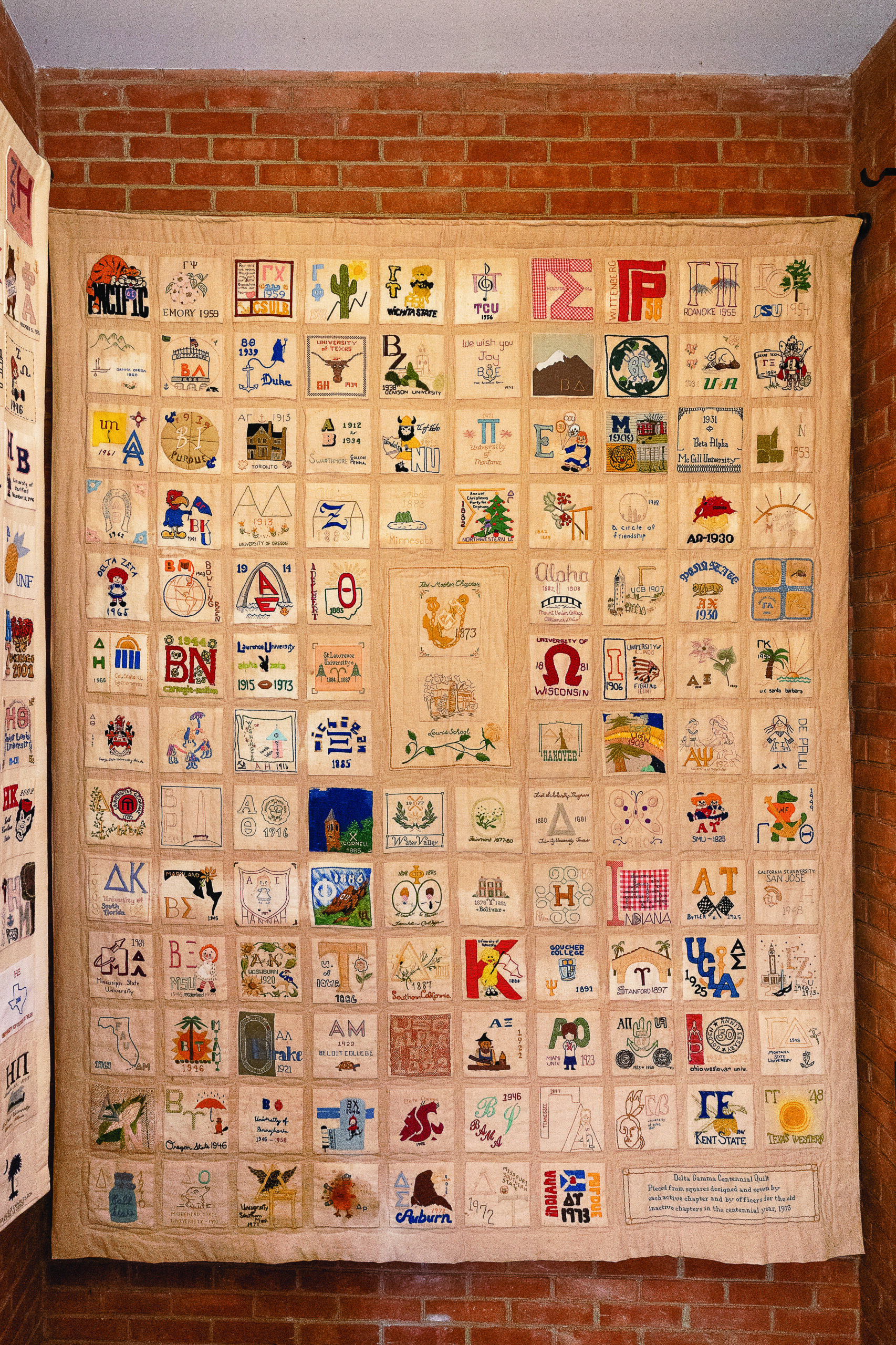
Delta Gamma was born in December 1873 when three young women found themselves far from home for the holiday season. They formed a club for mutual helpfulness that has grown into an international organization. We say goodbye to 2022 and enter 2023, the year Delta Gamma will turn 150 years old. For this final blog post of the year, we will look at one of the largest objects kept in the Frances Lewis Stevenson Archives: the centennial quilt.
In 1973, to celebrate Delta Gamma turning 100 years old, Officer Training Seminar (OTS) was held in Oxford, Mississippi, June 20–26. Kathryn Bell Gray, Mu-Missouri, who served as Fraternity President from 1972–1973, asked delegates to participate in a quilting bee as part of the centennial celebration. In her call to action, she spoke of how common quilting bees were at the time of the organization’s founding and alluded to what a quilt can symbolize, “You pieced your own, or you helped a friend. Then you took it to a gathering of ladies to be quilted. In this Centennial Year, and with your help, Delta Gamma is about to have a quilting bee. We are going to make a friendship quilt stitched with happy memories and hope for the future of our Fraternity.”
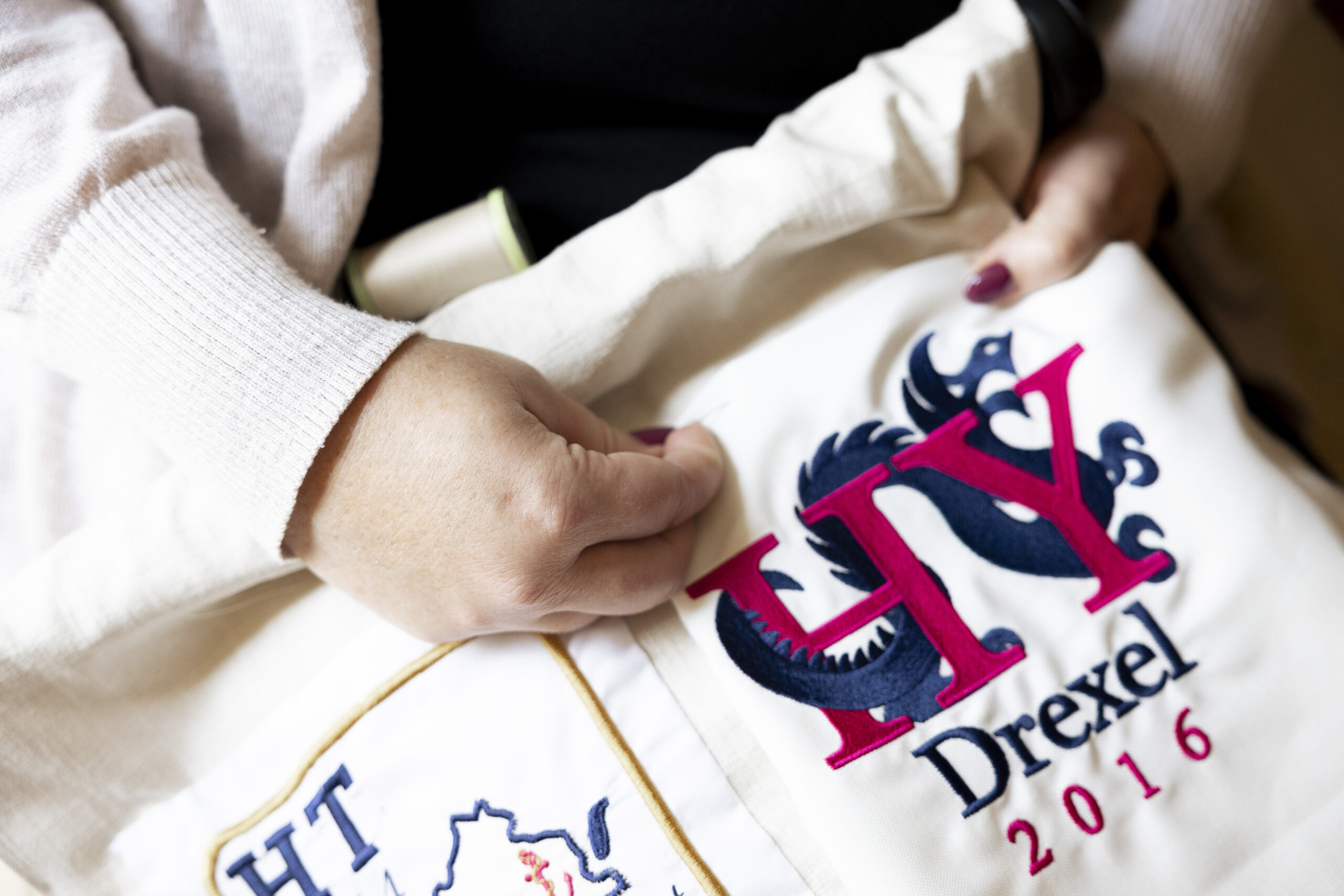
Kits and instructions were distributed, and each chapter was asked to create a design that reflected their school, location or their chapter in some way. But there were also several requirements for the design. Each had to include the chapter’s letters and installation date as well as the name of the school. Squares for chapters no longer in existence were crafted by alumnae. The center square, larger than the rest, representing the Mother chapter, was done by Mary Ann Dalton Shepard, Nu-Idaho. New sections have been added over time over. As part of the 150 celebration, squares from chapters not yet represented on the quilt were gathered. They were sewn on by Nikki Sabato, Eta Upsilon-Drexel, an alumna initiate who was initiated at the 2022 Convention.
The Centennial Quilt is featured in the Cable Connection section of the Winter 2022 ANCHORA. Stay tuned to learn more about the work put into completing the squares for chapters established since 1973.
From the Archives: The First Delta Gamma Cookbook

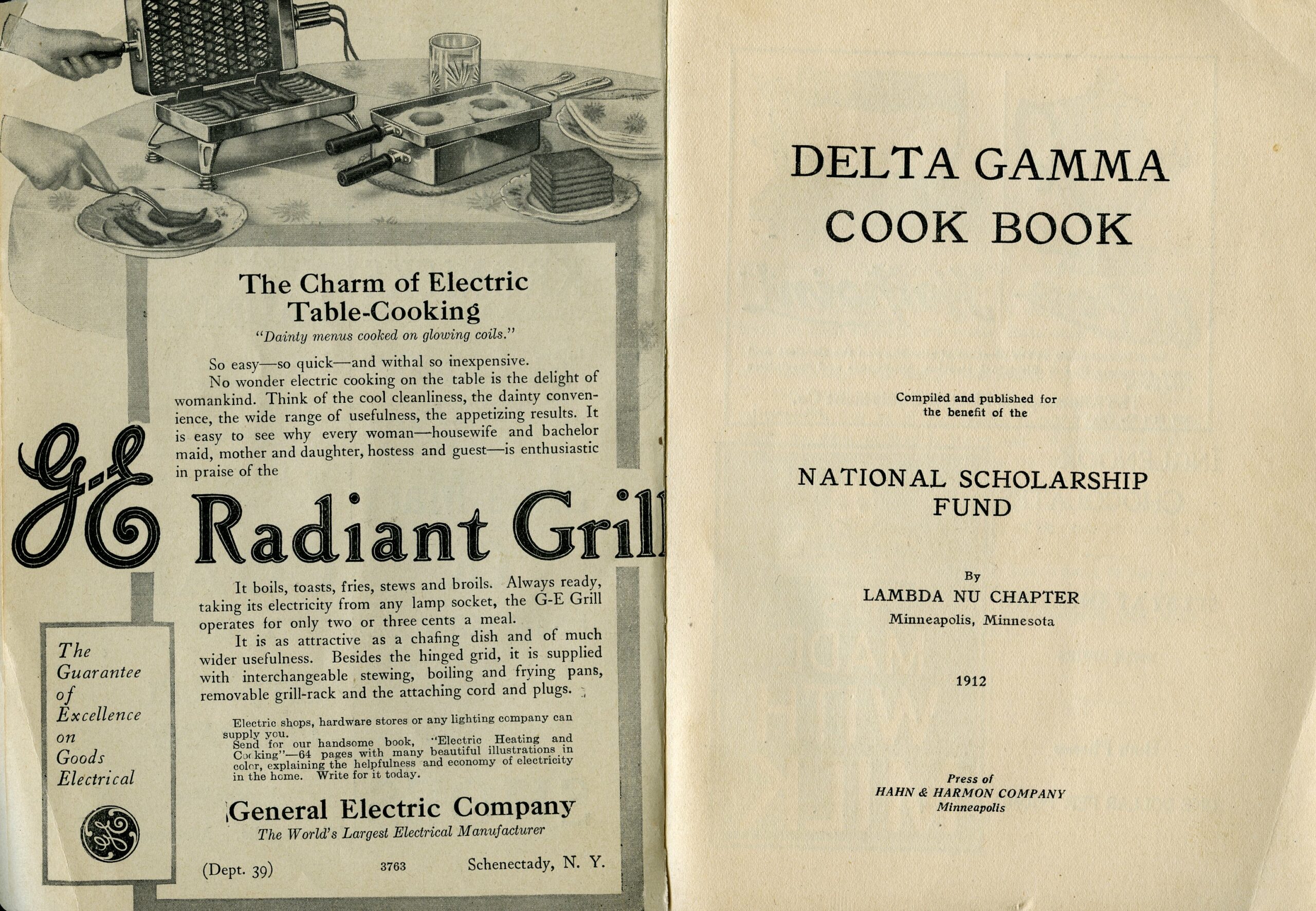
The first Delta Gamma cookbook was proposed to help fund Delta Gamma’s scholarship program. As far back as 1880, there were discussions of how to provide financial assistance to members when Sallie Young, Delta I-Trinity, wrote to the Mother chapter expressing her hope that such a fund could be established. At the 1911 Convention held in Waupaca, Wisconsin this hope finally became a reality. Ruth Rosholt, Lambda-Minnesota, presented a report on an investigation she conducted into fellowships and scholarships in other women’s fraternities. To raise the funds needed, it was decided that $200 from the treasury would be used and 50 cents from every initiation fee and from the annual dues of each member.
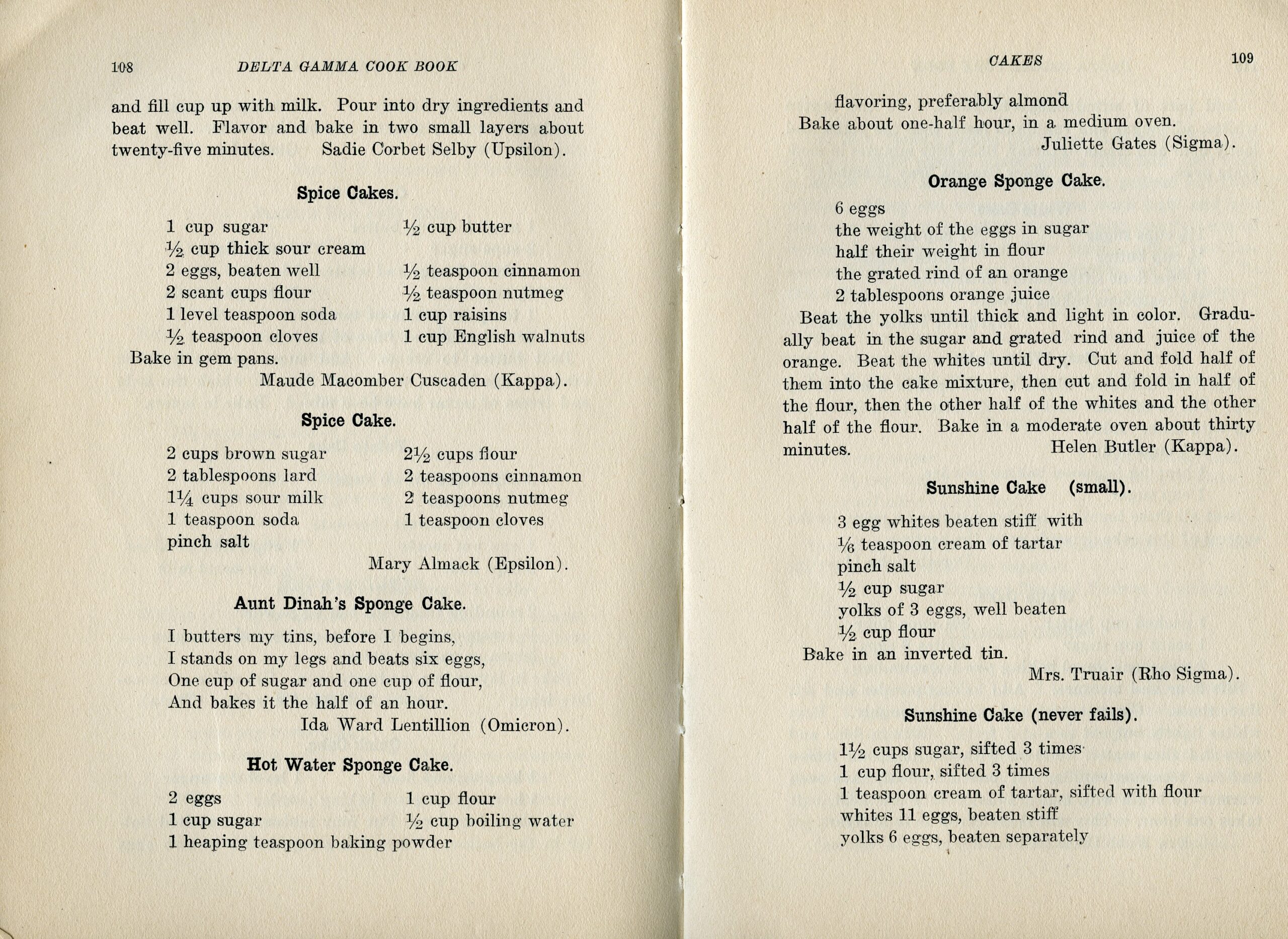
Another funding source would be the sale of the first Delta Gamma Cookbook. This project was led by the Minneapolis alumnae chapter. Compiled from recipes sent in by members, it was published in 1912. By 1913 it had made a $500 profit. The recipes featured in the book came from Delta Gammas far and wide. Two of our Founders contributed to the book. Mary Comfort Leonard submitted several recipes: Southern Corn Meal Spoon Bread, Fruit Cake, Cheese Straws and a drink called Blackberry Acid. Eva Webb Dodd submitted recipes for Ribbon Cake and Divinity Loaf, as well as chocolate and marshmallow filling for cakes.
From the Archives: The First Alumnae Chapter

/
The story of Delta Gamma’s first alumnae chapter reflects an important cultural moment in the United States in the 19th century. Allowing women to attend higher education institutions alongside male students was a controversial issue in the 1800s. The first college to admit female students, Oberlin College, did not do so until 1837. When Adelbert College began admitting women in 1883, a Delta Gamma chapter was installed that very year. Out of the 12 female students, seven were Delta Gammas. The women were met with hostility by the male students, as Cornelia Beardslee, Theta II-Adelbert recalls, “The [women] were not popular at Adelbert, and there was a sharp rivalry and jealousy on the [men’s] part as the girls did take the honors in every class.” Despite the women performing so well in their academics, feeling against coeducation grew until, in 1888, Adelbert barred women from attending.
That year at Convention (the fifth ever held) in Evanston, Illinois, the Delta Gammas from Adelbert applied for a charter of an alumnae chapter. Alumnae had been an active and integral part of the Fraternity for years, and a few had held gatherings. For example, alumnae in Lincoln, Nebraska, and Akron, Ohio, organized from time to time, but no formal alumnae chapter had ever been formed. The Delta Gamma Constitution did not even provide for alumnae chapters at the time women of Adelbert made their request. An article had to be created and incorporated into the Constitution, and the requested charter was ultimately granted.
Unfortunately, by 1891, the charter was returned. The number of members in the Cleveland area had dwindled to the point that continuing the chapter was not possible. Then, in 1912 meetings were once again taking place with close to 38 Delta Gammas living in the vicinity. Today, there are two Cleveland alumnae chapters, Cleveland East and Cleveland West Shore. This article, published in the Cleveland Press in 1968, details some of the remarkable history of the first alumnae chapter. Though it does contain one error, suggesting Delta Gamma was founded in 1883 instead of 1873.
From the Archives: Lewis School Door

Sometimes, the most seemingly mundane, everyday object can have an extraordinary history and symbolism. This is the case with this door from the Lewis School. Founded in the mid-1850s by Mrs. C.E. Lewis in Oxford, Mississippi, it went through several name changes over the years. Similar schools for young women, called female seminaries, existed throughout the country, with an estimated 3,000 operating in 1850. They were very often the only option a woman had to receive a formal education. Such institutions were only accessible to a small portion of women. The Lewis School, like other schools for girls at the time, would have focused on teaching their students “lady-like” subjects such as the arts and classical literature with little math or science.
When the Founders went away to school in 1873, they were virtually completely cut off from their family and friends back home. The closest train station to their hometown Kosciusko was 16 miles away in Durant, and Oxford was another 100 miles away. Roads at the time could be rough and hazardous, and there was no quick, easy way to travel back home. Walking through the door, the school was a metaphorical portal into a new phase of their lives.
Less than ten years later, the nearby University of Mississippi began admitting women. The Lewis School was able to continue for several years, but like other female seminaries, they could not survive in the face of coeducation becoming more common. Before the building was torn down, alumnae of Psi-Lewis rescued several pieces of the structure, including this door. Its survival, and the survival of the other Lewis School artifacts, is remarkable. Kept in Frances Lewis Stevenson Archives at Executive Offices, it is one of our oldest artifacts.
From the Archives: The First Delta Gamma Songbook

First Songbook Cover
Music and songs have been a part of the history of Delta Gamma from its very early days. The publication of the first Delta Gamma songbook came after several years of discussion and frequent changes in who was responsible for its compilation and publication. While some of this early history is murky much of it can be traced through the Convention minutes. The first mention in the minutes of Delta Gamma songs came at the 1883 Convention (the second Convention ever held). Dora Zimmerman, Alpha-Mount Union suggested “a committee be appointed in regard to having more songs added to our list of DG music.” At the 1885 Convention Mary Gladwin, Eta-Akron made a motion to appoint Theta II-Adelbert to compile material for a Delta Gamma songbook “to be brought forward at the next Convention.”

Song from the First DG Songbook
At that next Convention in 1888, some traction was finally made. The Convention minutes state, “On motion, the compilation of the Song Book was left with Zeta chapter subject to correction and revision by the Grand chapter and the alumnae of Theta chapter.” This alumnae chapter, the very first in Delta Gamma’s history was formed after Adelbert College barred women from attending. This likely explains the responsibility for the songbook being transferred to Zeta-Albion. Later that year the first Delta Gamma songbook was finally published.
Unfortunately, this first effort did not leave a positive impression. Containing only nine songs it was referred to as a “pathetic little pamphlet.” Just a year later at the 1889 Convention, the songbook committee was at work attempting to create a new version but were struggling to find enough songs, “Miss Osborne, Zeta chapter reports that only 25 songs suitable for publication had been received.” The second version would finally be published in 1895. There have been nine Delta Gamma songbooks published over the organization’s history, the current version contains over 80 songs.
Note: the history of the Theta chapter of Delta Gamma (Theta-Indiana: 1898-Present; Theta I-Fairmont: closed 1880; Theta II-Adelbert: 1883-1888).