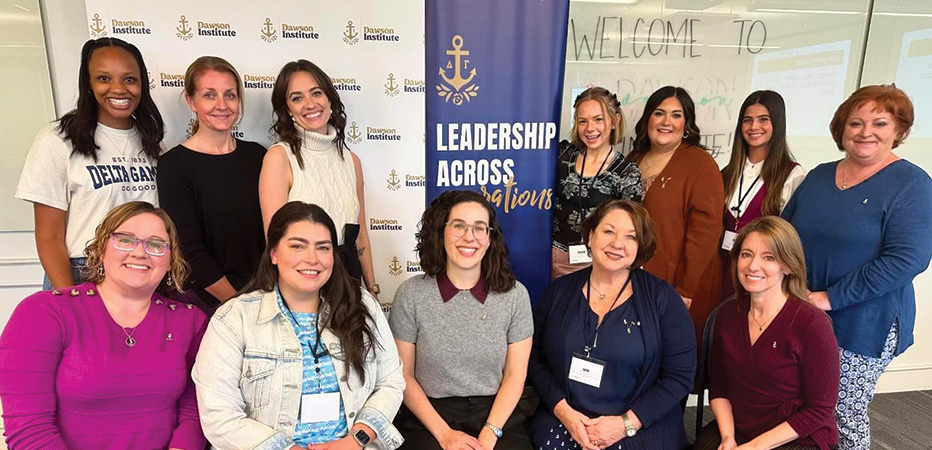
Our eighth annual Do Good Week is right around the corner from September 5-11! Delta Gammas and Friends of the Anchor everywhere prepare for how they can create a sense of societal engagement and do good in their community. Do Good Week encourages participants to motivate, empower and influence not only themselves and those closest to them but also their communities as well.
Even during these challenging times, we hope you will still find ways to do good everywhere. Now more than ever, it is encouraged to complete these acts of virtue while maintaining a safe social distance from others. If possible, accomplishing these good deeds individually or with family members is also recommended.
If you are excited to participate during Do Good Week but need some inspiration, look no further! Here are some ideas of ways to give back to your local community.
Be sure to use #DGDoGoodWeek on your social media posts throughout the week to connect with fellow Delta Gammas and participants completing good deeds for others. To learn more and download Do Good Week graphics visit our library here.


Members from Gamma Sigma-Houston worked to support their local food bank last year during Do Good Week! Alumnae from the Brooklyn alumnae association went around local parks and picked up trash during Do Good Week 2020.
By Jessica Hammond-Brouwer, Beta Pi-Willamette
Because this is Ashley’s story, we collaborated on it and I asked her if she wanted to share anything with my Delta Gamma community and she said that “she is not afraid to speak up and tell people that she is trans and other people should not be afraid.”


“Hello, I’m Jessica. I am a 1999 initiate of Beta Pi-Willamette, I live in Region 7 and I have three daughters.”
This is a typical introduction of mine at Delta Gamma events. However, four years ago, I would have said that I had two daughters and a son - this was before my youngest could verbalize that she was transfeminine. For those not familiar with this term, transfeminine describes people who were assigned male at birth, but identify more with femininity. At birth, Ashley was assigned as a male based on her genitalia, but this never felt right to her.
There were a lot of precursors to Ashley’s declaration that she was a girl. She was ridiculed in preschool for having “girl shoes” when she wore her favorite sparkly pair of sneakers. She felt visibly uncomfortable in "boy" clothes and, instead, would choose to wear pajamas. She was traumatized by haircuts - which, we later learned, was because they made her "look like a boy." All of these experiences manifested into an anxiety diagnosis, which vanished after her transition. At 5-years-old, she asked to have us, and others, use she/her pronouns and then, soon thereafter, chose a new name that was more visibly feminine. Luckily, we live in a state where she was able to get her birth certificate corrected. Luckily, we have family and friends and medical providers who have supported our daughter through her journey. Luckily, she has an amazing school community where she has not experienced any bullying. And, luckily, I have had Delta Gamma as a support through the years as well.
I didn’t think that I would join a sorority when I went to college or that I would have a transfeminine daughter, but it seems fitting that these two things continue to intersect. As for Delta Gamma, I have been fortunate to serve many volunteer roles for the Fraternity, including Regional Director, Regional Collegiate Specialist and Advisory Team Chair in multiple regions. Through these roles, I have been able to witness Delta Gamma's collective sisterhood while seeing the organization still embracing members' individual stories. I have also seen, in action, Delta Gamma’s words of empowering members “to act with intention so that they become an unstoppable force for good.”
In addition to volunteering for Delta Gamma, in 2018, I also began a local group designed "for parents, family members and/or friends to engage in respectful and inclusive dialogue about issues facing the trans, queer and gender non-conforming youth and children in our lives" - this group has provided education, support and connection for many local families. Additionally, I have had countless DG sisters reach out seeking information for themselves and loved ones. Oftentimes a DG sister will contact me because a friend of theirs, who is not a member of a fraternity or sorority, has questions or wants to speak with someone who has direct experience in parenting a transgender child.

One of the values of our Fraternity is that of having a “true sense of social responsibility.” I think that it is easy to speak of sisterhood and inclusivity in the abstract, but harder for some to execute it in action. For many transgender individuals, fraternities and sororities do not seem like a welcoming option to even consider. And I know that not every transgender person’s sorority experiences have been positive - both in their collegiate chapters and alumnae groups. Greek organizations have a lot of work to do regarding inclusivity across the board. However, I have also seen examples of the sisterhood that Delta Gamma specifically provides to transgender members. I recall stepping into a chapter house and seeing the trans flag proudly hanging in a member's room. I recall multiple chapters that I have worked with wanting to ensure that they were actively supporting their queer and transgender members. I have had sisters reach out asking thoughtful and respectful questions, wanting to educate themselves and increase their acceptance of others. I hope that, regardless of each Delta Gamma member’s level of understanding of transgender issues, that each of us are willing to challenge ourselves to learn more, to advocate for others and to continue exemplifying the values of our Fraternity.
Above photo: Jessica, Travis, Brinsley, Brooklynn and Ashley at the 2018 Delta Gamma Convention in Phoenix, Arizona.

A few resources for those willing to learn more are included below and I am always willing to speak directly to anyone who wants to reach out.
The Trevor Project: A Guide to Being an Ally to Transgender and Nonbinary Youth
Human Rights Campaign: Transgender Children & Youth: Understanding the Basics

By Charlie Kovanda, Zeta Rho-Ohio
Charlie Kovanda, Zeta Rho-Ohio, an alumna initiate and former Delta Gamma Foundation staff member, is currently a mother to a 2-year-old daughter alongside her full-time job as a Vice President in Diversity, Equity and Inclusion for JPMorgan Chase & Co. Charlie considers herself a wine and cheese enthusiast and also enjoys running, reading and watching great Netflix shows. During Asian American and Pacific Islander (AAPI) Heritage Month, she wants to share her story in hopes to spread awareness, shed light on the needs of the AAPI community and encourage action from AAPI allies and sisters.
“You aren’t Asian.”
“No wonder you are so smart – you’re Asian.”
“Where are you from?” “No, where are you REALLY from?”
These are just a few of the phrases I’ve heard regarding my Asian-American heritage. Most were well-intentioned and I shrugged them off as harmless – I think a lot of people do that – shrug off micro-aggressions and assume best intent. However, looking at what is happening in the Asian or Pacific Islander community right now, maybe I should have spoken up sooner. Maybe all of us as sisters, need to be more comfortable speaking up when we see or hear this type of behavior.
Now May is Asian Heritage month, and while I would love to celebrate my rich heritage, I can’t do that without also shining the light on some ways we as a sisterhood can come together to support and ally alongside the Asian community.
But first, let me share my family history… My grandma was born in Shanghai in 1917, just seven years after China had asked Britain for help stopping the Opium trade with India. It meant my grandma was born under British control and had dual citizenship. My grandma came from the wealthy class and even bound her feet, a symbol of status and beauty. She was also the second girl born into her family, so she was sent to live in a Catholic Convent.
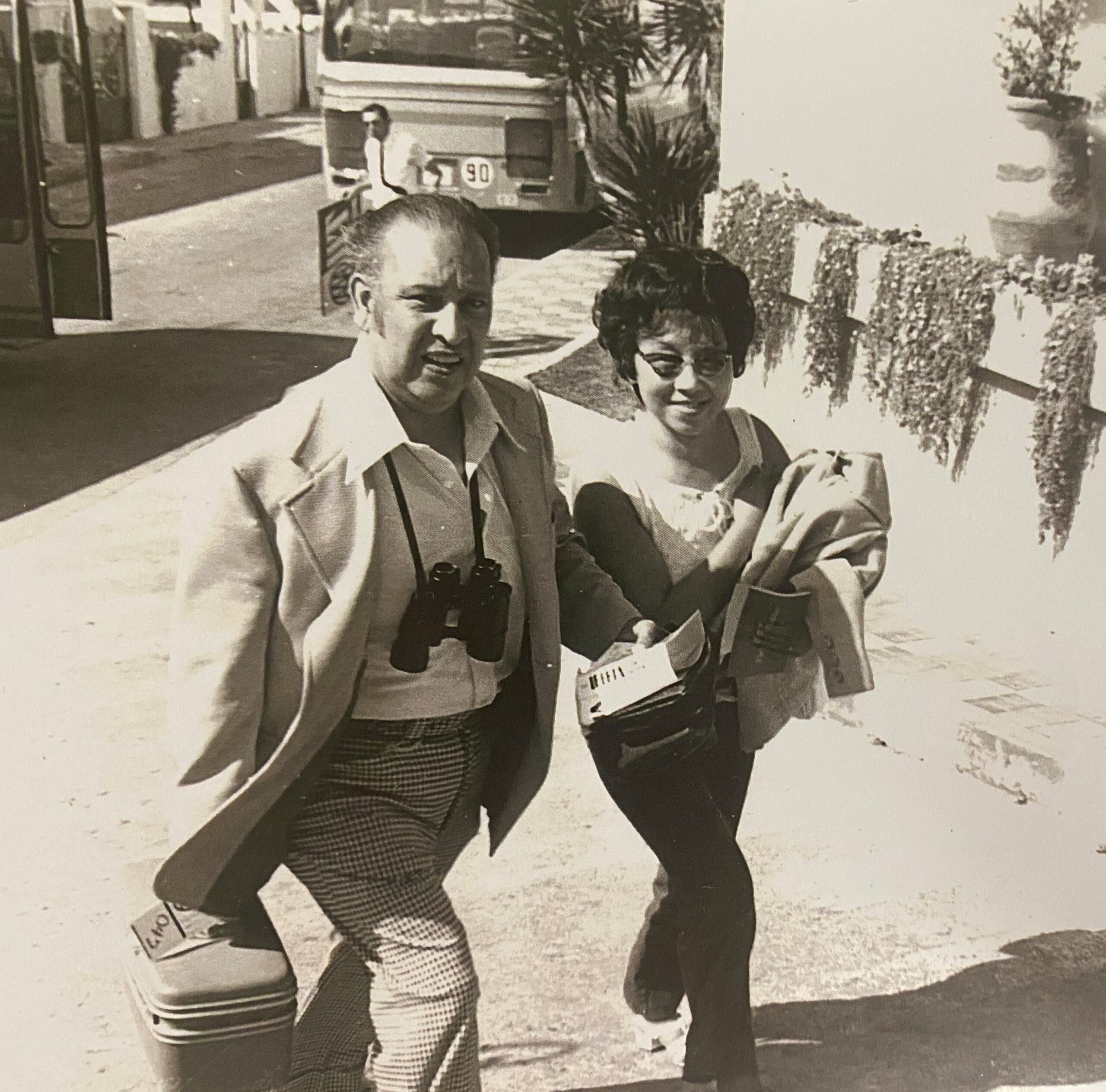
Years later, she met my grandpa, a Native American man of Hispanic heritage, who happened to be in China during World War II. He looked at her tiny frame and her “too-big-for-life” sassy attitude and fell in love. The rest is… my family history. That history includes their marriage in 1937 and my grandma’s immigration to the U.S. where there was a lot of anti-Asian hatred because of the war. At the time, Japanese and Chinese people were grouped together and often detested.
In 1942, President Franklin D. Roosevelt signed Executive Order 9066 – which ordered the removal of resident enemy aliens from parts of the West, vaguely described as military areas. It’s funny how presidents can influence xenophobic hatred of an entire population.
Now we are living in 2021, and I am a proud mixed-race American, who feels called to honor and speak up about my Asian heritage. Here are a few of my thoughts about what’s going on now in our world – these are my thoughts alone and do not represent the entire Asian population:
Now I have a daughter. She looks racially ambiguous, but I see her great grandma in her tiny face. When my daughter smiles and her nose crinkles up, her eyes look like my eyes, looks like my father’s eyes, looks like my grandma’s eyes. I look at her with wonder and worry about what people will think about her or how they will treat her. I hope that she can experience the same love and acceptance from Delta Gamma that I have received. In fact, I hope that this sisterhood is one that will stand alongside her to help her overcome some of the hurdles society might throw her way. I hope she truly gets to experience the bonds of friendship that Delta Gamma offers. I hope that she has a sisterhood that allies around her and advocates for her needs as she grows up. It is for her that I put my thoughts down. It is for her that I write this and urge you to action.
Check out the articles and resources below and don’t be afraid to join in on this conversation.
Resources to help stop Anti-Asian American Hate:
In 2013, we started a campaign called I Am A Sorority Woman, encouraging members of all sororities, not just Panhellenic ones, to showcase the ways in which they defy the stereotypes of what it means to be a sorority woman. This seeks to connect sororities and their members under one common goal, regardless of our letters.
For those of you who have followed our I Am A Sorority Woman campaign for the past seven years, thank you! And for those who are new to the campaign and are unfamiliar, welcome! Sorority women are strong leaders, involved community members, steadfast friends and passionate advocates.
This year, we have seen sorority women continually participating in the conversations about COVID-19 and social justice. They are joining peaceful protests; standing up for equal access to health care; starting their own companies to perpetuate equality and eradicate racism; donating face masks and hand sanitizer; volunteering their time to support elderly and disabled individuals in isolation because of the pandemic; speaking up on their college campuses to create change in the historically racist institutions of fraternity/sorority life and higher education; and so much more.
Sorority women across the globe are standing out as changemakers and are doing so more publicly than ever before. However, we know that there are some sororities that have been committed to these important issues for quite some time now, and we are committed to sharing their members’ voices and perspectives. While we all are participating in these conversations and social change, we also need to pause and listen to those who have been working toward a more just and equitable society for many years.

We want to shift the focus for this year’s 8th annual I Am A Sorority Woman campaign. We hope to be able to highlight the voices of sorority women who have marginalized identities, providing them a platform to tell real stories about how their sorority experiences have positively impacted the world around them.
For our 2020 I Am A Sorority Woman campaign, we’re inviting members of all sororities to bring attention to how sorority women are using this new virtual landscape to make meaningful change in their communities. No matter what letters you wear, we want to hear what you have to say.
Follow along using #IAmASororityWoman on social media and use that hashtag in your personal posts through the month of August to join in the conversation!
On Wednesday, June 10, Delta Gamma was joined by 317 individuals for our virtual panel discussion on “The Impacts of Microaggressions.” This talk was hosted by four DG alumnae who had expressed interest in speaking to their fellow sisters about their experiences as Black women in Delta Gamma. Planned back in May, the timing of this talk could not have been more poignant, amid worldwide protests against institutional and systemic racism that has impacted Black people for generations. As a historically white organization, it is our duty to use our privilege to advocate for change and create communities that are equitable and just. And we understand that self-reflection and growth at the individual level is just as crucial to creating this change.
You can watch the Article II Talk here. While we encourage you to set aside time to watch the entirety of this two-hour conversation, we have also summarized some of the points made by our sisters in this blog. (Note: this is not an exhaustive list of the many questions that these four panelists discussed, so watching the entire talk is important!)
Amarachi Ekekwe, Epsilon Beta-Bucknell: Amarachi is a graduate student at Carnegie Mellon University, studying to receive her Masters in Entertainment Industry Management. Prior to starting grad school, Amarachi worked at Ogilvy Public Relations & Advertising Agency and interned at CNN, and the Posse Foundation. Amarachi graduated from Bucknell University in 2018 with a Bachelor of Arts in psychology and women’s & gender Studies. She was initiated into Epsilon Beta chapter of Delta Gamma at Bucknell in the Fall of 2015. As a member of Delta Gamma, Amarachi served as the sophomore member-at-large on Honor Board and the Peer Adviser/RA on the suite. Amarachi also served as the President of the Panhellenic Council at Bucknell from 2016-2017. You can always catch Amarachi with a notebook in her hand, as she loves to rap and sing, as well as dance. In the future, Amarachi hopes to be a Media Personality as well as work as an A&R at a record label.
Ari Rodriguez, Eta Alpha-Pepperdine: Arianna (or Ari as she is known to friends) is a lover of Jesus, the wife to her Forever and lucky enough to be the mom of two pretty rad kiddos. She enjoys delicious food, good conversations and loving the heck out of people. When not Momming (or in some cases, while Momming) she runs an outreach for women in the sex industry, works part time as a substitute teacher and has the pleasure of serving as the advisory team chairman for Gamma Chi-Cal State, Long Beach chapter of Delta Gamma.
Jasmin Shupper, Eta Alpha-Pepperdine: Jasmin Is a 2005 graduate of Pepperdine University with a degree in International Business. Upon graduating she worked as a financial analyst/underwriter, living in Philadelphia and Washington DC, and satisfying her love of travel. She met her husband at Pepperdine and they got married in 2009 and have two beautiful girls that keep them very busy and duly entertained. She also loves all things real estate and holds a California Real Estate license. A self-professed “foodie”, Jasmin loves eating good food, traveling, having conversations that bring about racial reconciliation and expose systems of injustice and is very involved with the Center for Racial Reconciliation at her church.
Sharon Jackson, (she/her/hers), Eta-Akron: Sharon is a double graduate of the University of Akron with a bachelors in theatre and a masters in higher education administration. After graduating with her masters she began working in housing and fraternity and sorority life on multiple campuses. She is currently an Assistant Director in housing at Kent State University and has been charged with leading the departmental social justice initiatives. She also serves as the on-campus advisor for Gamma Epsilon-Kent State chapter. Once she leaves campus, she spends an excessive amount of time at the dog park with her dog, Sir Winthrop, or reading/writing/presenting about diversity/identity/privilege.
Sharon shares with us that they are defined as: brief and common daily verbal behavioral and environmental communications, whether intentional or unintentional, that transmit hostile, derogatory or negative messages to a target person, because they belong to a stigmatized group.
Next, Sharon answered a common question from attendees, asking for what some examples of what a microaggression is. One that Sharon gets a lot is the question, “What are you?” Some other examples include statements/questions like:
Here is a microaggressions chart shared by the panelists, which outlines further examples.
First, each of the panelists gave a response to the question, “As a collegian or young adult, did you always feel comfortable in your skin? If so, or if not, what were your roadblocks?” Below is an excerpt from Jasmine about her experiences.
Jasmin then posed a question to the group submitted by an attendee, asking, “As a woman of color in an NPC organization, how have you navigated the question ‘Why Panhellenic’ as opposed to some of the historically Black fraternities and sororities in NPHC, NAPA, NALFO, etc.?” Amarachi’s answer to that question included the following points:
After the panelists discussed a question about the use of social media to advocate for the Black community, Amarachi segued the discussion into what being a minority member of Delta Gamma has felt like both in the past and in the present: “We’re initiated into Delta Gamma, and now we are potentially one of 2-3 Black people in the organization. And our sisters may feel like, ‘oh you’re part of us now,’ but oftentimes, we don’t feel included, or we don’t feel like there’s enough space for us. Or there are places in Delta Gamma where we can’t fully express ourselves. So the next question is, what, if anything, has your collegiate or alumnae chapter done to make spaces and events feel safe and welcoming to you?”
Sharon delved into this topic deeper, explain it as changing your dialectic or the way you speak, depending on the environment you’re in. The way you speak, the words you use, your intonation. “Historically, black women specifically get ‘tone policed’ a lot – being told we’re aggressive, we’re loud, that we’re harsh and brusque, so softening the way we speak, how we approach people verbally, that’s what code switching is,” Sharon explained.
For Ari, she’s had a different experience than Sharon:
After Ari then posed the next question where she asked what types of microaggressions and/or discriminations other panelists have experienced in the classroom, an attendee asked in the chat, “How can sisters best listen and support each other after someone experiences a microaggression?”
As the discussion continued, Amarachi, Ari, Jasmine and Sharon answered a plethora of questions, a few of which were:
The four Delta Gammas on this panel answered all the above questions and more. We are so thankful that they were open to joining us for this dynamic, honest and important conversation.
Two of the questions that many of us may be asking ourselves are: How can I be the best ally I can be? What can I do to be better? Here are some excerpts from their answers:
It is our hope that the hundreds of Delta Gammas (and non-Delta Gammas) who joined us for this talk came away with a better understanding of what many of our Black members are dealing with on a daily basis. Most importantly, don’t let reading this blog post or watching this talk be the only think you do. Keep challenging yourself and those around you to do and be better and create safer, more inclusive communities for others who may not look like you. Because the pursuit of doing good is never done.
Sharon, Jasmin, Ari and Amarachi also created this compilation of resources that will help you delve deeper into understanding bias, hate and race relations in our communities. They designed this to be easy to pick and choose resources based on how you best receive information. Feel free to print it out and post it by your desk, or somewhere else that you often spend time, as a reminder that allyship and growth is a continuous process. This document also has their Instagram information in case you have additional questions.
By Jennifer McCreary Ford, Alpha Iota-Oklahoma
and Joyzelle Herod McCreary, Gamma Nu-North Texas
Almost thirty years ago, I became my mother’s sister when I joined Delta Gamma. I had heard about Delta Gamma my entire life, not to mention my brother and I would sing DG songs in the living room after going to a recruitment preview at the chapter my mom was advising. When I was looking at colleges, I would check if they had a Delta Gamma chapter. I saw the relationships my mom had fostered with sisters both in college and throughout her life and I knew I wanted the same thing.

When I went through recruitment, I don’t remember talking about Delta Gamma’s legacy policy. I knew I was a legacy, a double legacy in fact, as my grandmother was an alumna initiate during the establishment of Delta Psi-Baylor. I knew several of my mom’s friends had written a recommendation form for me, but my mom told me to keep an open mind. She hoped I would find a connection at DG, but ultimately she wanted me to do whatever I felt was right. What a gift it has been for nearly thirty years now to join my mom at Delta Gamma events. In the beginning of my Delta Gamma journey, I was “Joy’s daughter”, as she was kind of famous in DG, being one of the first women to introduce professional development training to our Fraternity. There was a time when my mom was known as “Jennifer’s mom” when I became a Collegiate Development Consultant and moved into my own volunteer roles. At one point we even facilitated a few training sessions together, to support each other as we continued our work with the Fraternity.
In two years, my own legacy will be off to college and we are starting to have conversations about majors, what schools she is interested in, and all of those other conversations you have as you approach those college years. Having worked in student affairs in higher education for 25 years, I love watching students come to campus for the first time and take everything in, and I love being part of their journey during their four years. I imagine it will be a little harder to watch my own child go on that journey knowing there are a lot of ups and downs along the way, but a good support network can make all the difference. We have talked about sorority life through the years and she loves to hang out in my old, beloved, comfy DG sweatshirt. I imagine she will choose to go through recruitment and of course I hope that she will find that connection with Delta Gamma, but I know she has to figure out what is right for her.
Last week, I heard the news about Delta Gamma’s update on the legacy policy, which no longer requires a chapter to obtain approval for release or prioritize legacies on their invitational or preference bid lists during recruitment. My first reaction was surprise, but after a few minutes of letting it sink in, I understood it.

No, I do not think this decision was made lightly, and no, I do not think this decision was made in direct response to the global conversation that is happening about racial injustice right now. Over the past several years, I have had the opportunity to work with current Council members as well as Executive Offices staff on exploring our recent contextualization work and what it means to be a women’s fraternity that is inclusive and welcoming of all women. Part of being inclusive is recognizing that membership should not be based on a decision made by a potential new member’s sister two years ago, or by her mother thirty years ago or by her grandmother sixty years ago.
The institution where I work had a legacy policy in admissions that did not guarantee admission but did give those applicants a slight advantage over someone who was not a legacy. There was a lot of controversy when that policy went away, and I believe some alumni truly thought it meant their child would not be able to gain admission. I have the pleasure of working with our orientation and family programs office and attend different events throughout the year and I love when a parent walks up with their child and they are sporting their institution ring and have written their class year on their nametag. To my knowledge, there has been no shortage of second, third or fourth-generation students on our campus since the policy change occurred over ten years ago.
In two years, when my daughter is off to college and hopefully going through recruitment, I know she will keep her eye on Delta Gamma. I also know that I will make sure that she and her friends have several recommendation forms sent to the chapters on their campus. I know the recruitment teams will review each form and work to ensure that we continue to have members of outstanding character, honors, talents, personal development and scholarship. What a bonus it will be when some of those new members happen to be a legacy. If that comes to fruition in our household, I will certainly be celebrating, but I will also be celebrating all of the new members who join our amazing sisterhood each year.
Striving to become a more diverse, inclusive and equitable sisterhood
As Delta Gammas, we strive to “Do Good.” This shared purpose has anchored our bonds of sisterhood since 1873, but today more than ever, it is important to remember that “doing good” requires action. It is not about “looking good” or about “being seen doing good.” We want to do good in the world in the hopes that our world will become a better place for all people. This means that our sisterhood needs to become more diverse. More actively inclusive. More equitable. We recognize this need, and we know that this commitment has not always been the case in our past. We are committed to changing that, and we don’t expect you to just take our word for it. We promise to demonstrate that commitment with tangible action in support of our many sisters who are not white.


Below are the tools and trainings that we’ve developed and implemented thus far, as we seek to become a more diverse, inclusive and equitable sisterhood. This is not a marketing campaign, or a short-lived effort on a current topic. We know that this is barely scratching the surface of all the ways in which we need to be better champions for change.
As part of our multi-year partnership with the Kirwan Institute for the Study of Race and Ethnicity, that began in December of 2019, later this month our partners at Kirwan will begin work on a four-part equity audit and climate assessment aimed at uncovering assets and barriers regarding promoting an equitable and inclusive Delta Gamma. The primary objective of the equity audit is to gain greater understanding on a wealth of topics related to racial inequity by evaluating our current policies, procedures and programming, and provide a space for members of color to share their stories and lived experiences. The changes that will be made as a result of the audit will assist to ensure anti-racist, inclusive and equitable policies, procedures and organizational norms within Delta Gamma. The Fraternity will be evaluating things like our legacy policy, Honor Board procedures, election processes and so much more in this process, led by a third-party expert in this space. We look forward to the ways in which we can continue to champion important changes to better our organization, the experiences of our sisters, and our impact on the world.

We hope that all sisters who want to contribute to lasting change in our society will start by following this path, which we will continually be expanding:
Article II Talks are webinar-style learning sessions for members and non-members. These talks are grounded in the pillars of Article II of our Constitution: high ideals of friendship, educational and cultural interests, social responsibility and the best qualities of character.
DG Dialogues, launched in 2018, is Delta Gamma’s member education program. As a part of DG Dialogues, chapters complete four programs over the academic year, corresponding to each value of Article II. Programs are completed in small groups of 10-15 to allow for deep discussion and meaningful learning.
Many of the program options for our ‘educational and cultural interests’ value center around diversity, inclusion and equity, including “Social Identities 101”, “The Importance of Language”, and “Social Justice Issues: Race and Ethnicity”.
Chapter management team (CMT) officers who want to improve their chapter members’ commitment to equity and inclusion should implement one of these programs, whether virtually or in person. Though four are required for each chapter, that does not mean your chapter can only do four programs. If you think your chapter needs more opportunities for DG Dialogues or would like to see different topics, tell your CMT officers what you would like for your chapter.
What are we missing? Tell us what you’d like to see from us as we work toward becoming an intentionally inclusive organization, by emailing us at EquityandInclusion@deltagamma.org.

To Watch
To Read:
To Listen
To Donate
“Having been founded upon the principles of personal integrity, true friendship, and social responsibility, I know that I speak on behalf of the Fraternity Council and all of my Delta Gamma sisters when I condemn any and all acts and expressions of racism, bigotry, and hate. Our expectation of our members is that they embrace all citizens of our global community with respect, good will, and kindness. Abuses of power, flagrant violence, and preying on others based upon racial hatred are appalling acts, and have no place in a civilized, hopeful world.”
-Wilma Johnson Wilbanks, Alpha Psi-Mississippi
International President
During this time of unprecedented health concern and isolation, we understand that many members and their support systems are feeling more academic, financial, mental/emotional and physical/health stress than ever before. In our effort to support the women of Delta Gamma, we have compiled a list of emergency resources we know of that may be beneficial to you and your family in this time.
Academic Resources
Financial Resources
Mental/Emotional Resources
Physical/Health Resources
Avery H., a collegiate member of Alpha Omega-Arkansas, recently made care packages with encouraging notes to drop off at the VA hospital, as the hospital is not currently allowed to have visitors.
Brooklyn W., a collegiate member of Beta Psi-Alabama, has been assisting with COVID-19 testing in her community.
Jaia G., a collegiate member of Theta Gamma-UNC Wilmington, brought medicine and food to a sister in self-quarantine.
Lori B., an alumna of Beta Nu-Carnegie Mellon, has been using spare fabric around the house to sew masks for patients in the hospital.
Mary F., an alumna of Beta Mu-Bowling Green, showed kindness by leaving a large tip when she ordered curbside delivery.
Kristin C., an alumna of Zeta Eta-Texas State, asked for permission to send her exercise instructor’s workout videos to friends that are deployed overseas.
Kayley S., a collegiate member of Delta Pi-Southern Mississippi, volunteered with Extra Table, an organization ensuring that soup kitchens across the state of Mississippi will continue to provide food during this time.
Robin M., an alumna of Gamma Epsilon-Kent State, has been researching and sharing helpful tips for mothers homeschooling their children right now.
Jean E., an alumna of Upsilon-Stanford, made donations to help first-generation and low income Stanford University students travel home safely.
Jenna G., a collegiate member of Epsilon Psi-Rutgers, put together a comprehensive list of self-care tips and resources for her sisters to follow while social distancing.
Brianne H., an alumna of Epsilon Pi-Connecticut, is live-streaming her workouts so that her friends can follow along.
Autumn G, an alumna of Eta-Akron, is collecting donations to distribute to her third grade students!Here are some additional suggestions for ways to "Do Good" while practicing social distancing and taking safe measures to protect yourself from COVID-19:

Liz Niemiec, Alpha Tau-Butler, started her charitable organization called Little Wish Foundation at just 16 years old. This year, she was awarded the Diana Award, which is known as the highest accolade a young person can receive for their outstanding service to others. Named after Princess Diana, the award is presented in London to young people around the world every year.
We asked Liz to share with us how Little Wish Foundation came to be and how she continues to “Do Good” through this special cause.
The idea for Little Wish Foundation all began with a child named Max, who was battling cancer. Max was the son of my teacher; and at a small, private school in Indiana, everyone was like family. I was in 8th grade when Max was diagnosed with Wilm’s Tumor (a form of kidney cancer) and I remember feeling overwhelmed, sad and confused when learning that 4-year-old Max could get cancer. I honestly thought that only adults got cancer, and I was shocked. We followed Max’s brave battle for two and a half years. So much of what he went through during this time should never have to be experienced.

I remember visiting Max at his home with my mom in the final months of his battle. He had just received a gift he had always dreamed of: a puppy. It was beautiful to witness Max’s happiness with finally having his puppy, Chewy. That seemingly “little” gift really made his days brighter.
I was once again reminded of the magnitude of this little gift at Max’s wake. It was a day that forever changed my life: being at the wake of a child younger than myself, and due to cancer. To this day, it’s hard for me to describe what emotions ran through me approaching Max’s casket to pay my respects and say goodbye. A photo was hung above the casket of him and his puppy and it spoke to me. It even felt like Max spoke to me. I felt moved, driven and chosen to do something.
Leaving the wake, I turned to my mom and said “I want to start something big to help other kids fighting cancer. It’s not fair that Max is gone. Will you help me?” She said yes. From this, Little Wish Foundation was created to give other little wish gifts to children fighting cancer, like Max, and we’ve never looked back. It’s all because of Max.
In the first few years, it was a truly homegrown effort. I held meetings in my church’s chapel and sold blue silicon bracelets reading “Little Wish - in Memory of MAX” to all of my friends and peers. I asked a lot of questions to the adults I recruited for help and started planning our first fundraisers. (I often had my friends join me in my garage after school to make posters for the walls of the fire station venue.)
The best part for me, always, was getting to deliver each “Little Wish” we raised money for and meeting the kids we were helping. It was an effort that ruled my days and nights when I wasn’t at school, fueled by pure excitement and the drive to just keep helping. My goal has always been to bring as many smiles that I can to kids fighting cancer. The hurdles I faced were mostly related to the fact that my mom and I were completely new to the non-profit world. With zero experience, we created Little Wish Foundation from scratch.

I was so young when I thought of creating Little Wish Foundation, but in a way, I think my naïve boldness was my advantage in just listening to my heart and doing it, with no second guessing.
In college, it was the amazing forever friends I made in Delta Gamma who inspired me to keep going with Little Wish even when it was difficult, or life threw hurdles in my way. I learned so much from the great women in my chapter, all unique and equally wanting to help me in my pursuit of Little Wish throughout college. They even donated funds from an ice cream social to Little Wish and surprised me one night with a huge donation. It was a sense of incredible camaraderie, love and support I’d never experienced. Though I graduated almost three years ago, I still have such a big support system from those women. I’m very appreciative for my experience.

I’m honored that I was even nominated for the Diana Award, let alone to have represented America in attending the award ceremony in London this summer. I’ve always admired Princess Diana and her legacy, as she was known for her incredible heart and service to others in need. And for her style! She was a gift to everyone’s life she entered. What an incredible legacy to leave behind! The Diana Award, in her honor and memory, is known as the highest accolade a young person can receive for his or her outstanding service to others. I’m very grateful for the experience of receiving the award in London and will never forget the many amazing young people I met who are all doing truly awesome things to make the world a better place. I left the ceremony feeling nothing short of inspired.

I dream to see Little Wish Foundation continue to grow and impact every child battling cancer in our country. We’ve granted more than 2,000 little wishes so far, in 14 children’s hospitals in seven states. I know anything is possible and I’m filled with hope in fulfilling this. I also dream of using my story to inspire other women and young people around the word. I love being creative and connecting my passions for the greater good, so stay tuned to see what happens next. Last but not least, as our motto states, I plan to Live Life to the MAX!